I admit that I was apprehensive about going, since the HESS company banquet was the night before and I heard it could go late into the evening. All of my work friends would be there. The banquet was filled with dancing performances, raffle prizes, and free food and drinks. I almost made it out to a dance club with a group of people after the banquet ended, but my eyelids started feeling heavier and I realized I was pretty exhausted, not in the mood to be out. I took a taxi home and decided I would get up early and go on the tea-themed day trip Julia had invited me to a few days earlier, even though I had a lot of end-of semester grading to do.
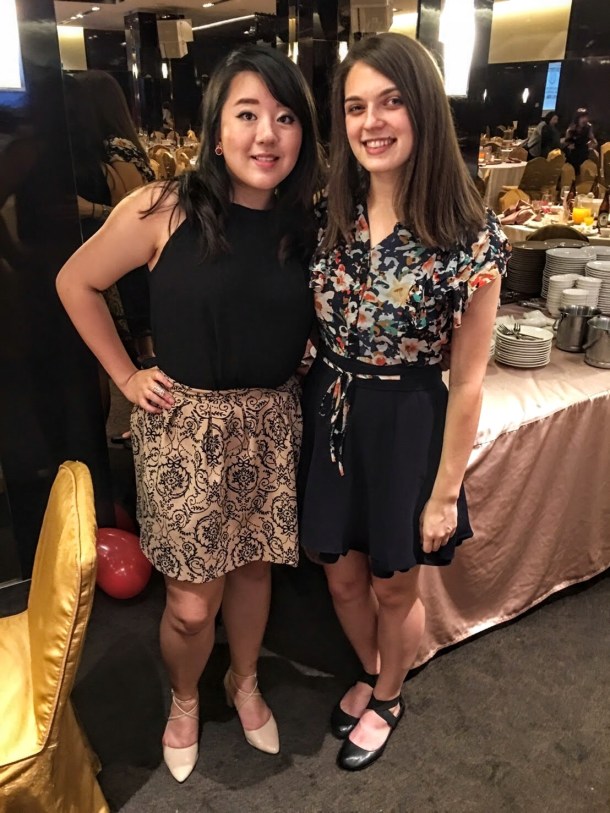
Susan and I at the year-end banquet
So, even though it was hard, I set my alarm for early on Sunday morning, and I took a cab to Ximen Station, where I met the rest of the group going on the tea tour!
The group included six others— my friend Julia from Taiwan, a girl from Columbia, a guy from Hong Kong, a guy from the US, and a guy and a girl from Germany. They were all around my age and spoke English. It was very exciting to meet another group of English-speakers in Taiwan who were interested in an educational day trip like this (learning the process behind a cup of tea).
We took a bus from the station up a winding, mountain road to the Pinglin District, known for its tea, especially tea harvested during winter. We got off the bus and met our tour guide for the day, who led us in a small, local bus to his bed and breakfast. We walked alongside tea fields until finally arriving at the quaint hostel. The tour guide seemed young and friendly, and his girlfriend greeted us at the door when we got there. Soon after arriving, she told us about the ingredients that make up the bubbles in bubble tea. This bed and breakfast exclusively makes organic, healthy, vegetarian food and drinks, so instead of regular flour, she said she uses sweet potato flour, matcha (made from green tea leaves), and sugar.
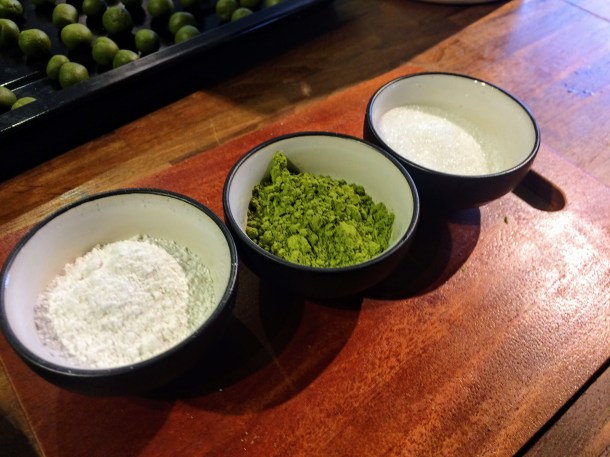
The ingredients that make up the bubbles in green-tea flavored bubble tea
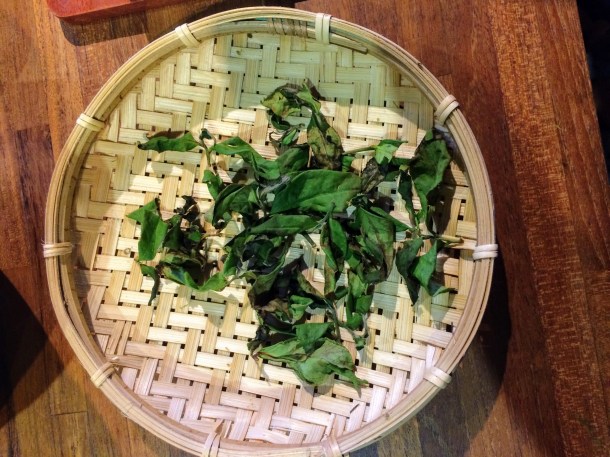
Green tea leaves are the base of matcha
The three ingredients combine to make a green, play-doh looking material, which we all grabbed small chunks of and rolled into little balls. She would later boil these and use them in green-tea flavored bubble tea.
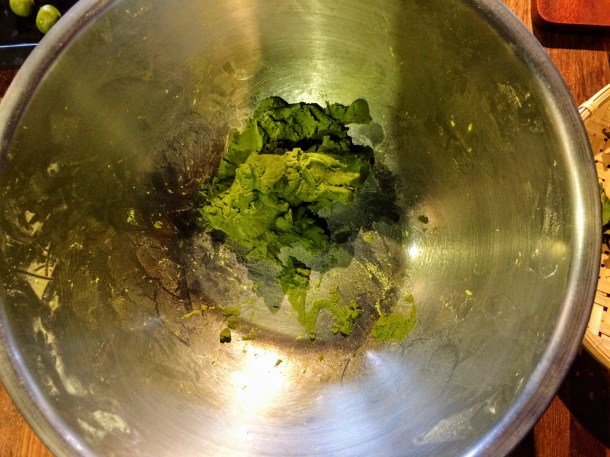
Before
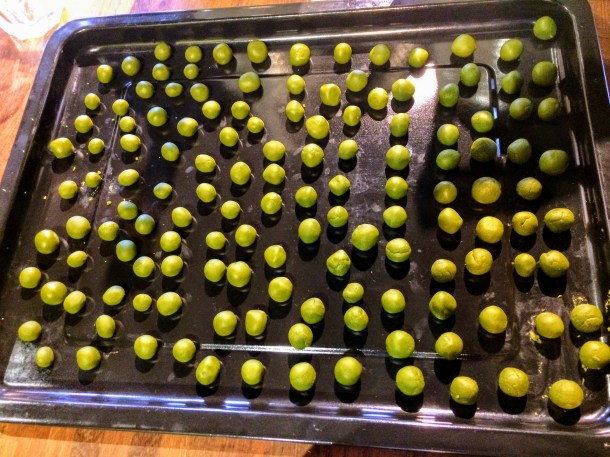
After
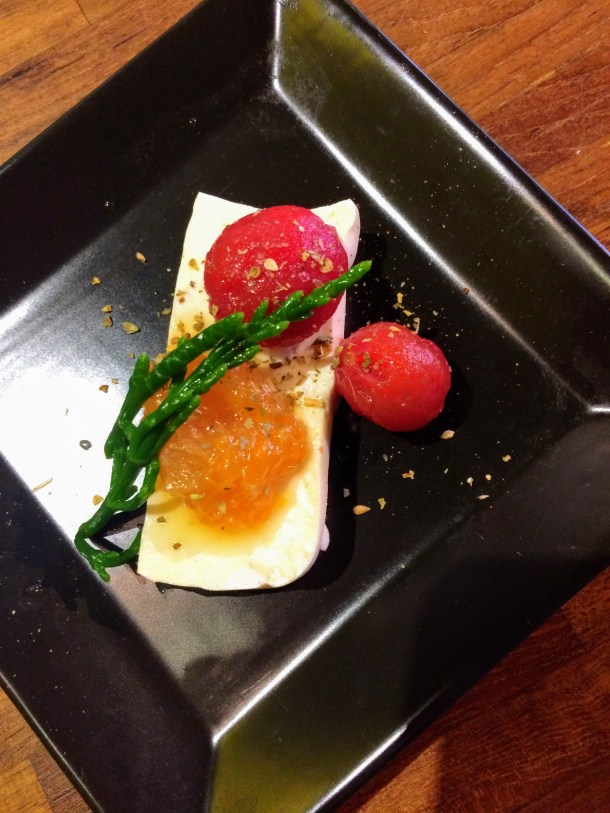
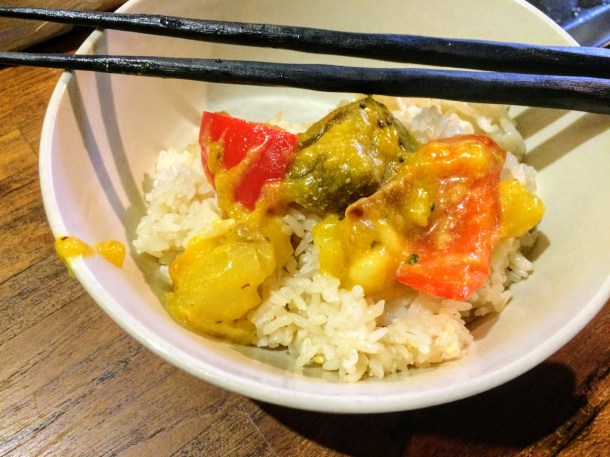
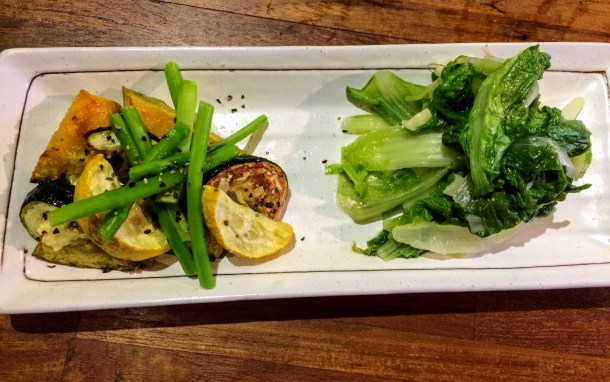
Next, we had a several-course vegetarian lunch that was so, so delicious. Sometimes it’s hard to find healthy food in Taipei since a lot of food here is fried or covered in oil, and vegetables can be expensive so they’re not extremely common. It felt so good to eat vegetarian food on a mountainside with new friends. The first dish was a block of tofu topped with orange marmalade, asparagus, vinegar-soaked cherry tomatoes, and oregano. Delectable! Next on the menu was a creamy stew filled with all kinds of vegetables— squash, cauliflower, mushrooms, pumpkin, you name it. Served over white rice steamed in green tea instead of water, it was the perfect dish for an overcast day with light rain like this. We were also served a small plate, half with green, garlic veggies, and half with spiced pumpkin, zucchini, and squash.
Next, we were given tea farming gear to get into the spirit before we headed out to the tea field. We wore conical hats that rice farmers often wear, as well as floral-patterned sleeves. Some were sleeves that just covered your arms, while others were more like a small jacket that covered your back and tied in the front. After taking a few pictures of our new tea farming outfits, we were off to the tea fields.
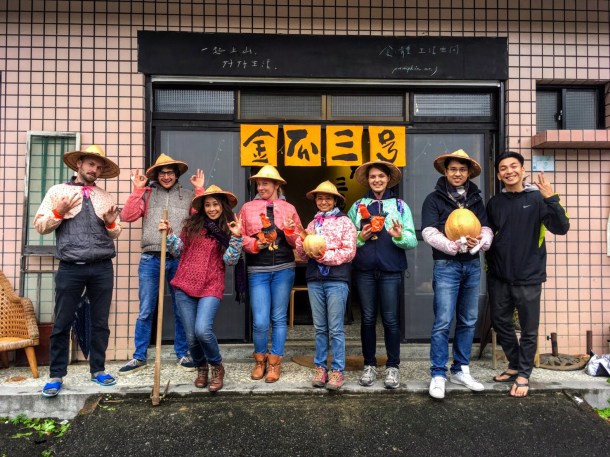
The tea crew!
In the tea field, our tour guide explained that farmers only pick the top two leaves (stems included) of the tea plants. This plant, called the camellia sinensis, makes all black, white, green, and oolong teas. These are the only “true teas” in the world because they actually come from the leaves of a tea plant. All herbal and flower based teas are not actually considered “true tea” because they don’t come from the tea plant. He explained that the biggest differences in these four types of “true tea” is the level of fermentation (oxidation) the leaves undergo. White tea is completely unfermented, green tea is either unfermented or very minimally fermented, oolong tea is half-fermented, and black tea is completely fermented.
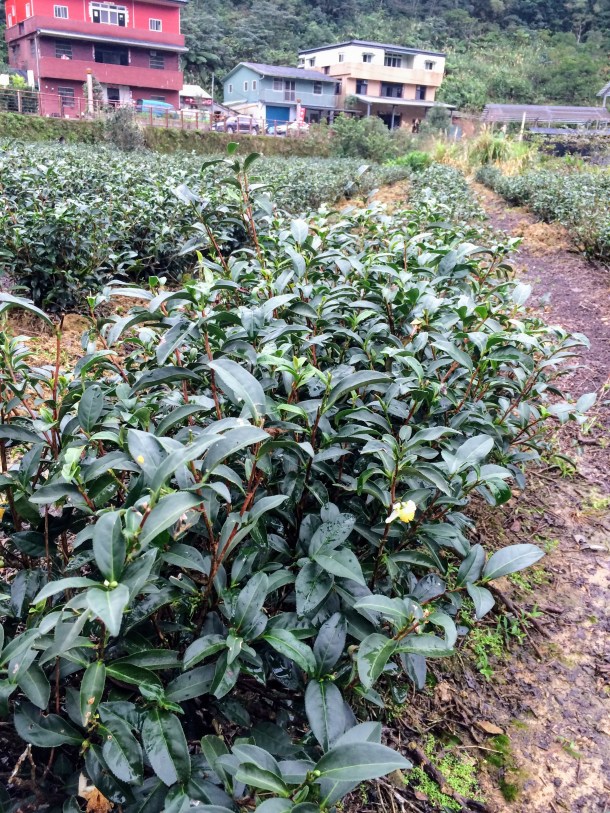
The tea plant
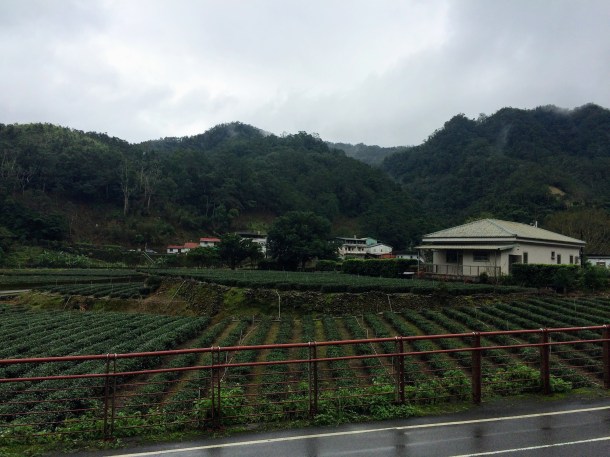
The tea fields of Pinling
We headed to the processing room to see how the leaves are fermented, heated, stirred, and molded. Making tea is a several-step process, one that usually takes a full day and night to complete one batch. It’s pretty hard to describe the process, since every tea goes through different steps to reach the color, flavor, and aroma profile of the target style of tea. However, in general, tea leaves go through a similar process. Steps could be in a different order, for a longer or shorter period of time, or omitted depending on the type of tea— so don’t take my explanation word-for-word. This is more of a general outline of the process. We had already covered the first step, picking the leaves in the field. Next, withering takes place on large, flat bamboo trays where the leaves are spread out for a total of 10 hours. They are turned over every two hours, five times. The amount of water in the leaves is dramatically reduced during this step, usually by a fourth or half. Then the leaves are heated in a machine for about 8 minutes, and transferred to a stirring machine, which breaks down the leaves and releases some of the aroma and flavor of the desired tea. Some types of tea do not go through the stirring process. For some types of tea, leaves enter a molding process where they are shaped into a ball to maximize the flavor. Finally, the tea is laid out to dry on the bamboo trays once again, and then it is packaged for sale.
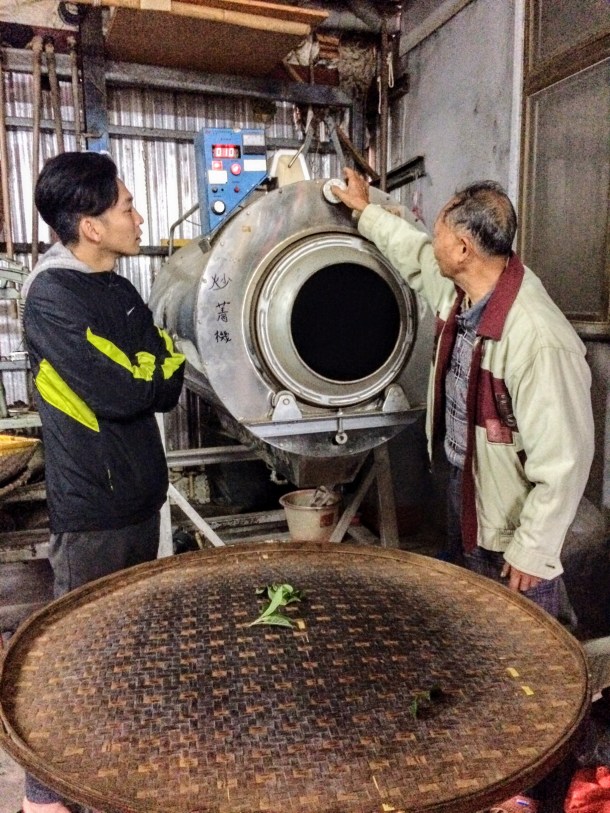
The machine that heats the tea leaves (back), flat bamboo tray for withering (front)
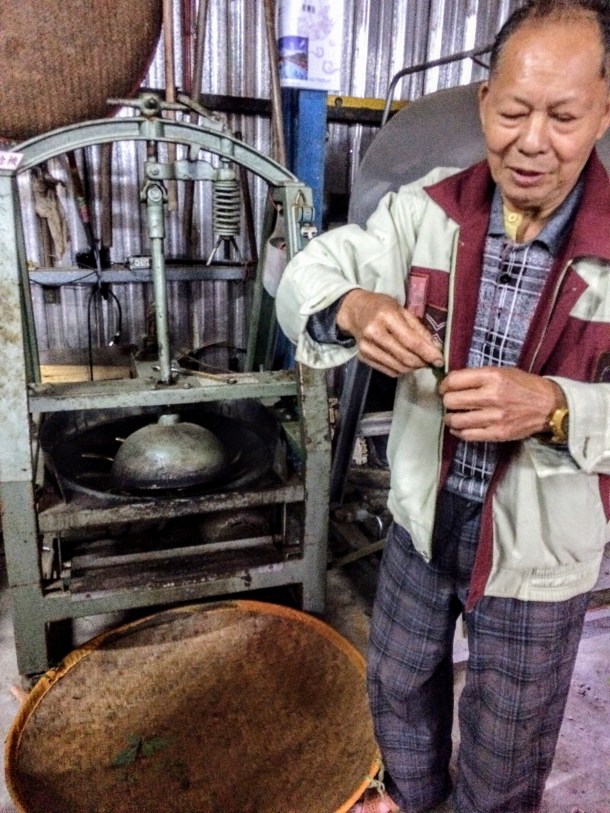
The machine that stirs the tea leaves
After we learned how tea is processed, we got to taste oolong, black, and white tea. I think the white tea was my favorite because it was very mild and easy to drink. It was great for a cool day like this one. White tea is also supposed to have lots of health benefits like lowering cholesterol and reducing the risk of cancer. All of the teas were great though. The older woman served unlimited tea— every time you finished a cup, she was there to refill it with one of the three tea pots. We all sat on wooden stump stools, sipping steaming tea made from the fields we had just walked through. It was very relaxing.
Next we went on a short hike. It was short because the trail was muddy from the rain, and the tour guide slipped and decided we should head back. On the short trail we got to see a monkey bridge, a slanted part of a tree where monkeys like to hangout, and the river that provides Taipei’s drinking water. Our guide also told us to pick up some leaves for a craft we would do back at the bed and breakfast.

Monkey bridge
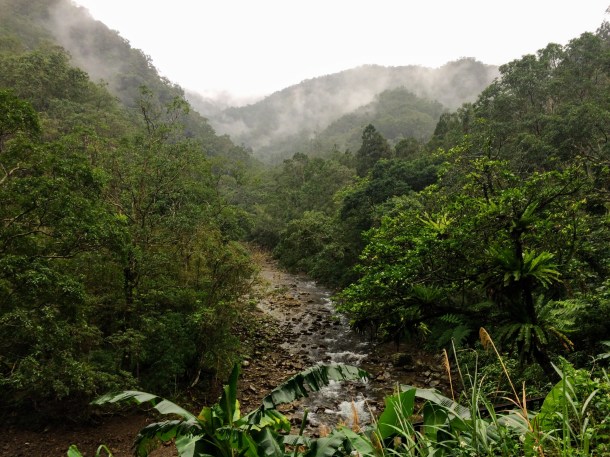
A photo from our hike
Back inside the warm hostel, the guide’s girlfriend had finished the green-tea flavored bubble tea we had rolled the bubbles for that morning. We all sipped on drinks as we worked on the craft she had prepared for us. Paints, paintbrushes, and water sat on on a newspaper-lined table. We were to paint the leaves we had collected from the trail, and press them onto small, drawstring bags. I got super into the craft and made an all-out painted leaf collage. As a final touch, I stamped the name of the hostel and the date in the corner of the bag. We got to take home a small bag of tea-flavored candy as a souvenir, so I picked the peanut candy and slid it into my newly decorated drawstring bag.
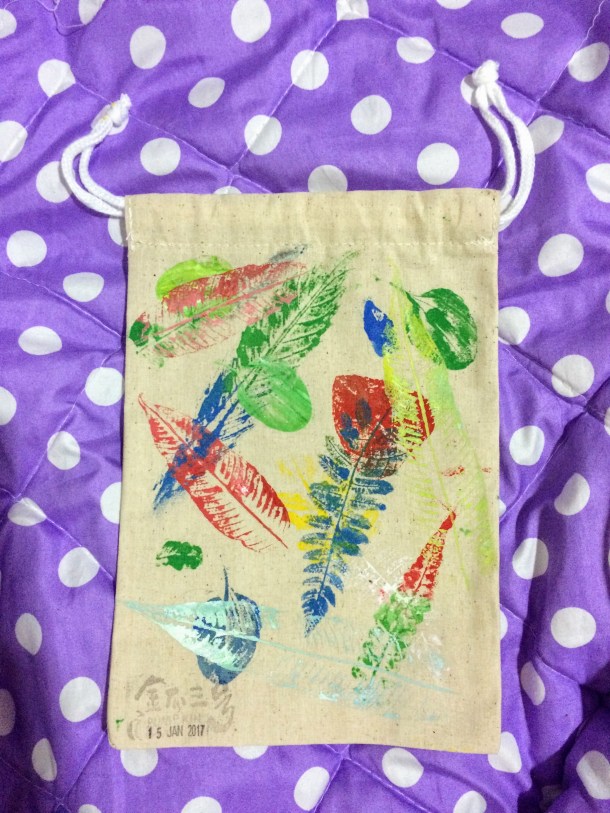
The final product
It was starting to get dark when we made the trip back to Taipei. We took two buses and a subway to our end destinations, waving goodbye as people reached their stops. I was really glad I decided to come. The tea tour was way better than being cooped up inside tallying my students’ final grades. I learned about the work that goes into a cup of tea, I met people from all over the world, and I saw a new area of Taiwan. There’s no better way to spend an overcast Sunday than drinking warm tea with new friends.
 Mandarin Allison
Bravo, I feel like I just read article in a cooking magazine or a special interest story in the WSJ. I’m going to buy some white tea.