A little bit about Malaysia: slightly over 60 percent of people practice Islam, 20 percent Buddhism, 10 percent Christianity, 6 percent Hinduism, and 1 percent traditional Chinese religions. Malaysia has a very wide mix of ethnicities and ideas. Close to 70 percent of the country is comprised of native Malays, 20 percent Chinese, 7 percent Indian, and a small population of European and Middle Eastern people.
We reached our hotel and immediately went to try some of the food Penang is famous for. We went to a hole-in-the-wall gem called Hameediyah that serves Indian/Malaysian fusion and prides itself on being Penang’s oldest Nasi Kandar restaurant. Nasi Kandar is a dish of spiced meats or seafood in a curry sauce served over rice with a number of sides, usually vegetables. Right at the entrance, you could smell the strong aroma of Indian herbs and spices. There was a long line, and as we waited in it, we watched a man cook what looked like egg pancakes, flipping each one with a spatula.
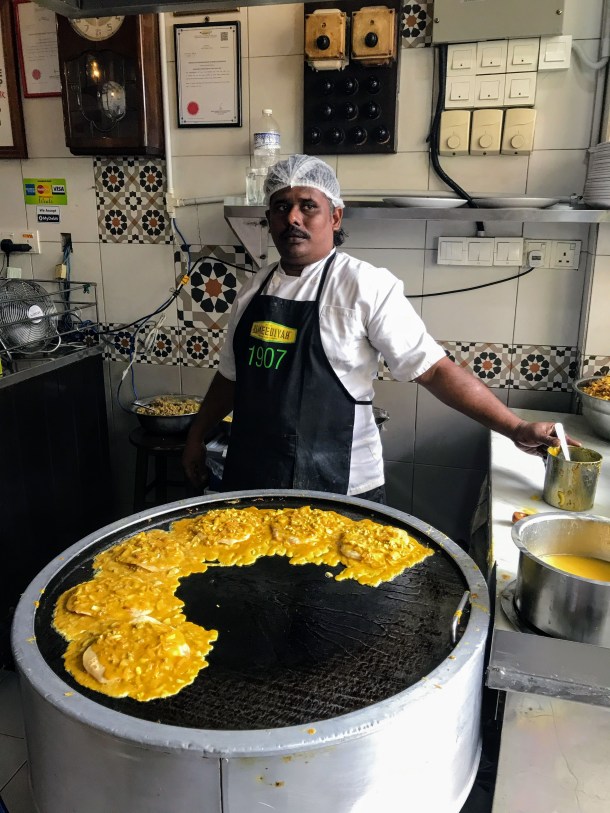
When you finally get to the prized front of the line, you can point through the glass at any number of items you wish to try — there’s a variety of meats, seafood, and veggies soaking in pots of flavorful curries. They tally up your total at the register and offer to bring Mango lassi to your table. We each ended up ordering another lassi by the time the meal was over… to cool the burning spices of the Nasi Kandar and just because it was so good.
Next, we went out to explore the historic streets of George Town, a UNESCO World Heritage Site since 2008. A colorful blend of British colonial buildings, Chinese shop-houses, and Mosques, the city is a proud, bold mix of influences from its past. Discovering street art on the sides of homes and alleyways was like a game of I Spy around every corner. The city was once an important trading hub on the Strait of Malacca, but is now a cultural capital that approximated 32 million tourists in 2017.
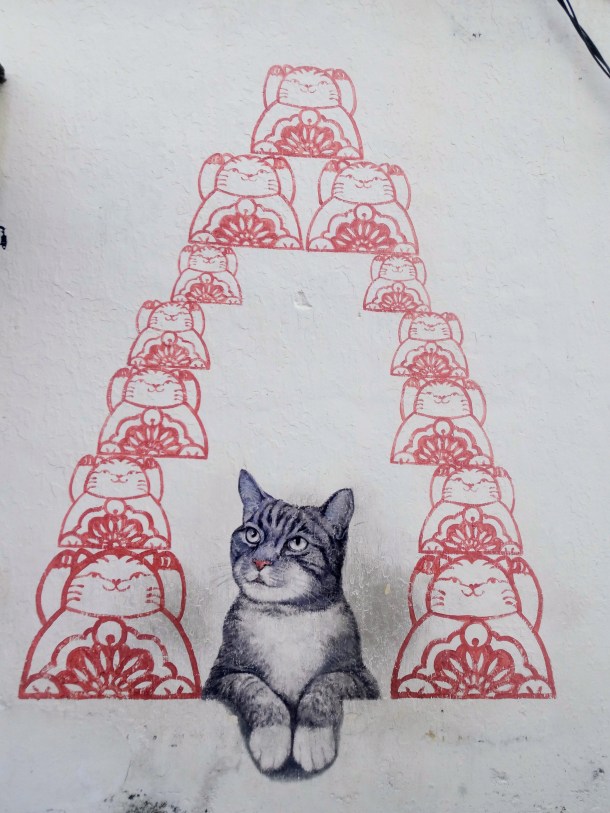
Street art
We walked the grounds of the Kapitan Keling Mosque, built in the early 1800s, on the way to Armenian Street, an alleyway full of art galleries, cafes, vendors, and street performers. The mosque was the first permanent Muslim institution established in the area, and it’s one of the designated buildings included in the World Heritage Site. Located at a prominent corner in the historic old town area, this mosque sees a lot of foot traffic and offers free tours.

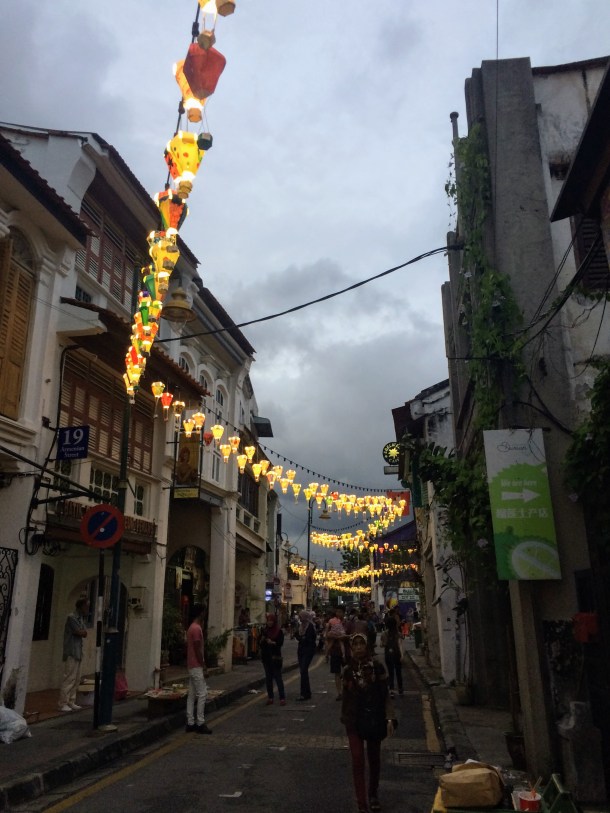
We kept walking until we found Armenian Street, or “Lebuh Armenian” in Malay. Dotting the way, there were Chinese temples, Clan Houses (I’ll explain those later), and mosques. Hanging over the busy alley were colorful lanterns dangling in a zigzag pattern. We meandered in some of the art galleries, watched a mediocre fire thrower juggle his craft, and found some of the most iconic street art in the area.

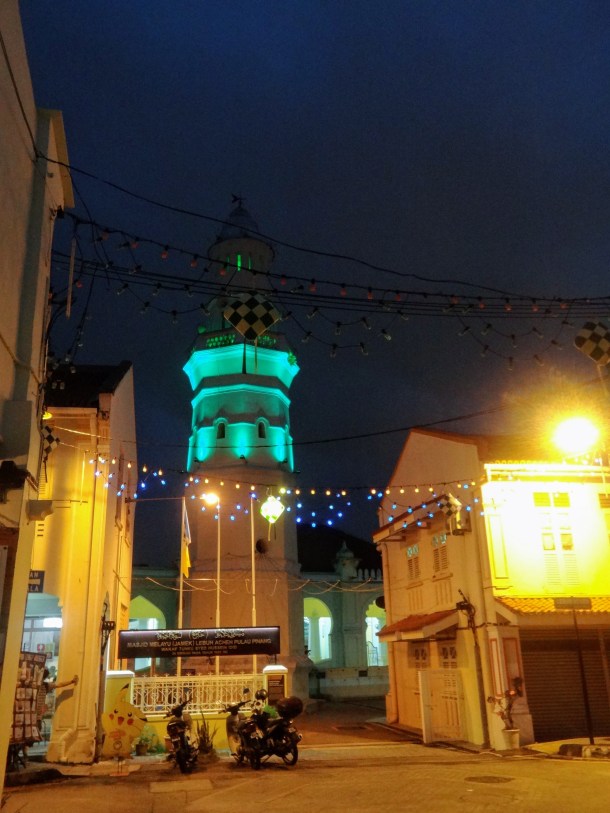
We got street food afterward on a road with everything from authentic Chinese street stalls to Middle Eastern food trucks. Then we walked around town some more, including by another prominent mosque called Acheen Street Mosque. It was lit up in blue-green, and the tower looked much like a lighthouse. We headed back, but decided to stop for ice cream across from our hotel before bed. It was a successful first day on the island of Penang!
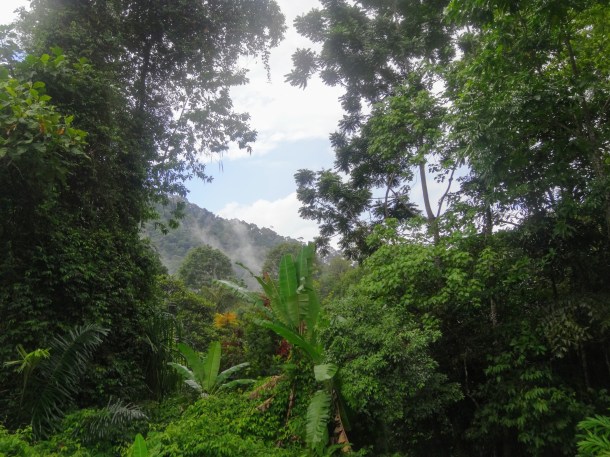
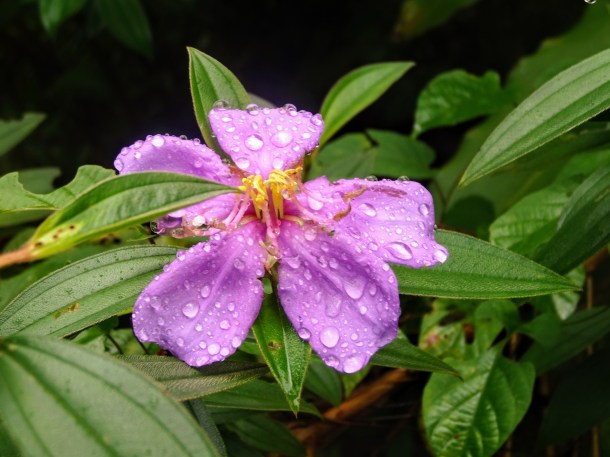
The next day, we passed by Cheong Fatt Tze Mansion, an indigo-blue house built by a rich Chinese merchant and completed in 1904. The tours were scheduled for specific times, so we made a mental note to go the following day. Then we got a ride to Penang Botanic Gardens. The gardens were a mix of outdoor jungle foliage and small greenhouses. Inside the buildings were more delicate plants that needed a controlled temperature or extra care. Outside were massive trees, waterfalls, hanging vines, and weird jungle flowers I’ve never seen before.


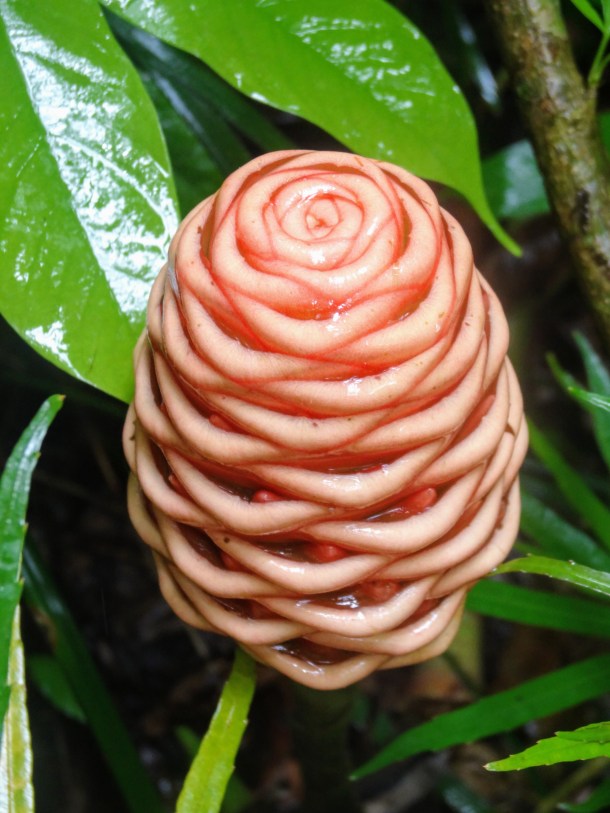
Most bizarre flower I’ve ever seen
We walked the grounds, and when we walked back toward the entrance we saw A TON of monkeys. They were everywhere. If you’ve never seen a bunch wild monkeys interact with each other (and humans) before, it’s kind of terrifying. They screech and run around showing their fangs. Monkeys are always picking fights with each other and hissing. This group of monkeys had a few babies in it, their moms closely protecting them from the other vicious monkeys. The baby monkeys were really adorable. It was weird to be so close to a baby monkey, no cage, no enclosure, not even a bunch of people taking photos. Just some super cute monkeys out in their natural habitat: the jungle forest foliage of Malaysia.


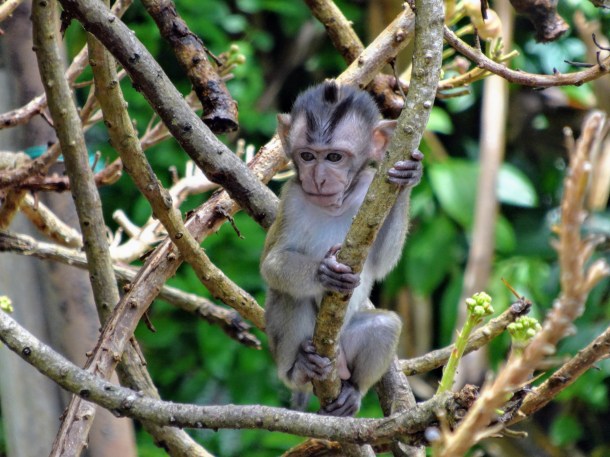
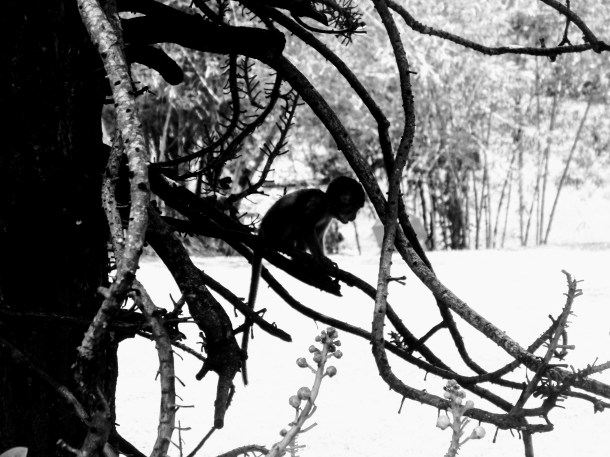

Once we finished watching the monkeys run around in panicked chaos and got our fill of the cute, little baby monkeys, we headed to Penang Hill. On the ride over, our driver told us that many Malaysians dislike the Middle Eastern tourists because they can be very stubborn, and their interpretation of Islam is a lot stricter than Malaysians’. We hopped off at the entrance, got our tickets, and walked into a massively long line that we couldn’t see the extent of when we joined it. There was a spot to take a photo in front of a green screen before entering the line, so we watched people pose for the camera. We watched a Middle Eastern couple take a photo together in front of it. She was wearing a hijab, but not the veil that covered her face. She turned around, facing the screen, to attach her face veil before she would take a photo. I found that interesting: how she wasn’t wearing it in public, but needed to put it on for a photo. Just something I noticed.
We waited in the hot line for what felt like an hour. It could have actually been an hour. You lose track of time in Malaysia’s heat. We took a railcar to the top of the 2,733-foot hill and walked to the viewing deck, which had a spanning view of Penang.
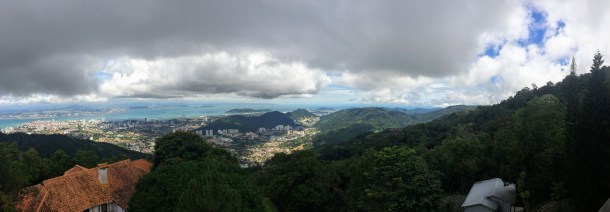
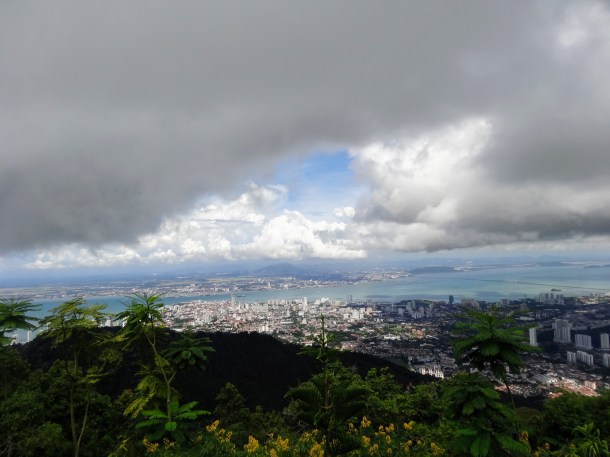
From there, we realized the line back down was going to take hours. It was so long that there were clowns walking around to entertain the people waiting. We headed to the food court, and tried to observe how the women in niqabs ate. It turns out that they leave the veil on and eat underneath it. I, personally, would make a huge mess doing that, but I’m sure they’ve had lots of practice.
Jack had the grand idea of walking down the hill instead of waiting in line for the railcar back, and I begrudgingly obliged after much convincing. It very well could have been faster than waiting in line, and at least we’d be moving and not standing. It took what felt like forever to get down, close to 2 hours of walking down a steep decline. My knees were so sore, but the only option was to keep going. At least the path was paved, and on the way we saw more monkeys and the largest ant I’ve ever seen in my life.
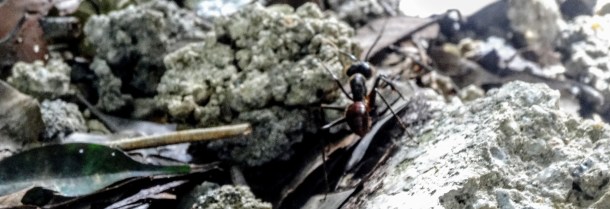
The gigantic ant in its natural habitat
When we finally made it to the bottom, I was relieved. We got a car back to our hotel and relaxed for a while. It rained that night, but we were back at it the next day. More Penang adventures in the next post —
 Mandarin Allison