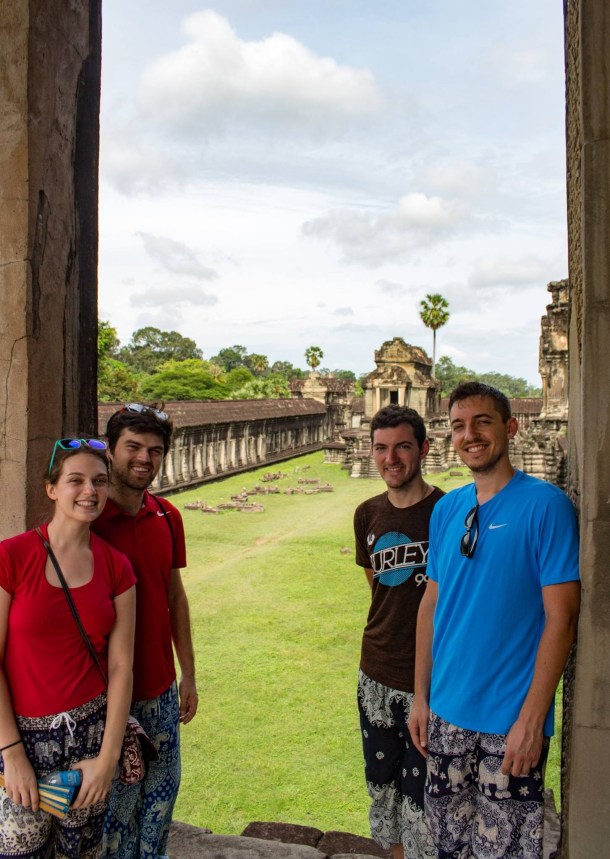
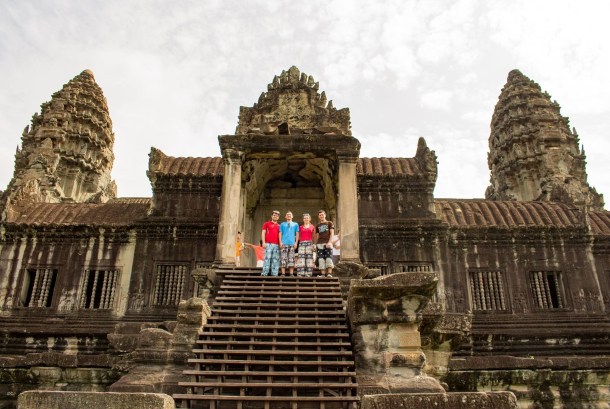
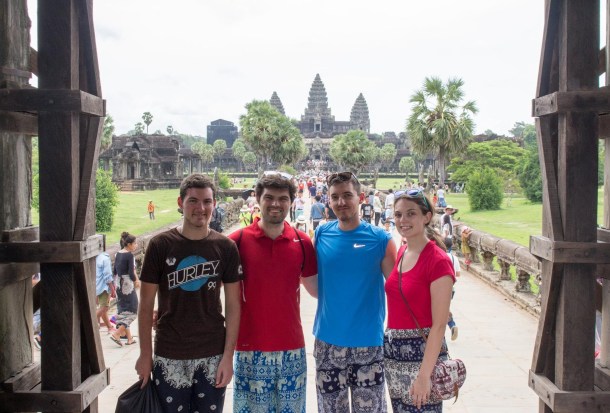
In the morning, our guide picked us up from Onederz in an SUV complete with air conditioning, bottled water, and ice-cold washcloths to pat our faces with after being exposed to the Cambodian heat. We made a quick stop for tickets where the staff took our headshots and printed them on day passes for the grounds. We walked a floating bridge over a moat to the walls of the complex. “Angkor Wat” means “Temple City” in Khmer, and it’s the largest religious monument in the world, covering 402 acres of land. It was built in the 12th century for the Khmer Empire as a Hindu temple for the god Vishnu, who represented protection and the preservation of good. Later in the 12th century it transformed into a Buddhist temple. The 12th century king, and one of the empire’s greatest kings, King Suryavarman II, presided over the construction of Angkor Wat. He intended it to be his state temple and eventual burial place, which scholars have garnered based on its westward orientation. Kings in that era had multiple wives and concubines, leading us to debate whether it would be better to live in 12th century, hot-as-hell Cambodia and be king, or live life as an average citizen today with technology and modern conveniences at our fingertips. I think Zack and Josh were pretty set in the latter camp, but Dan wavered.


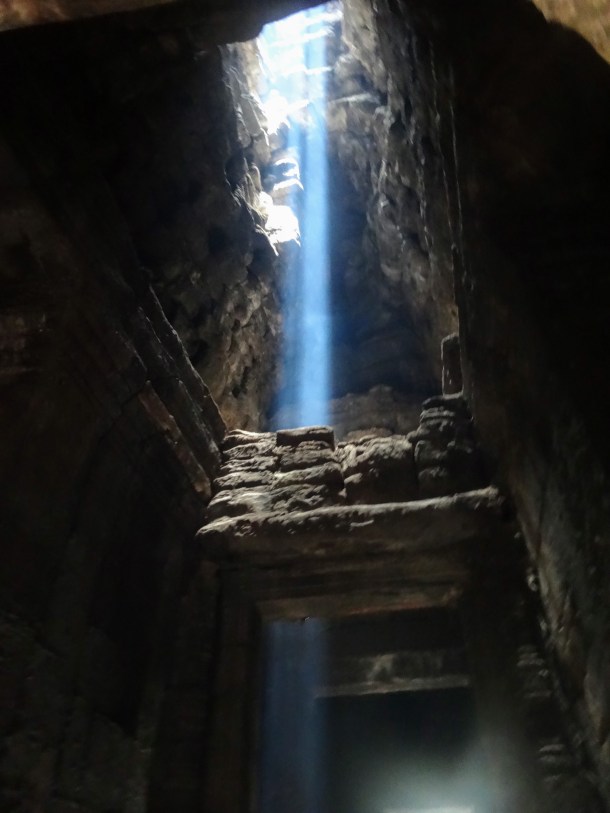
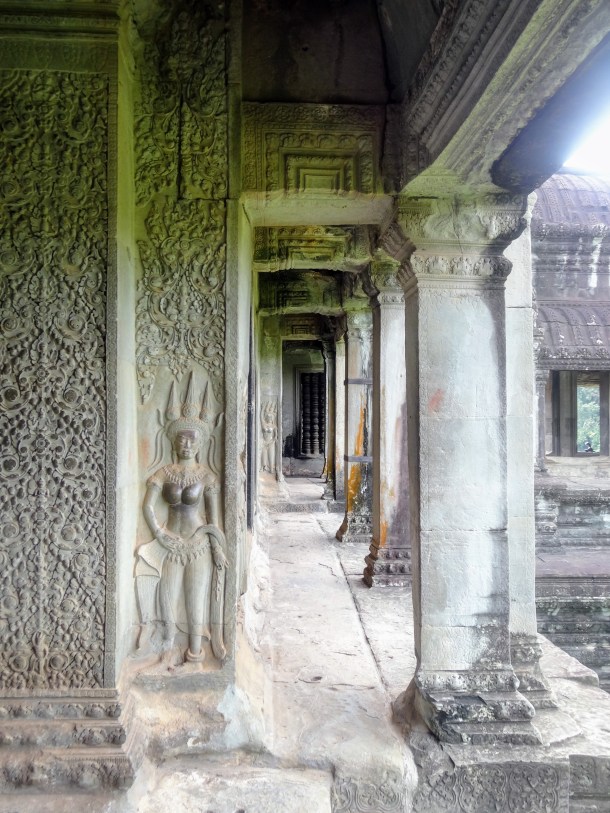
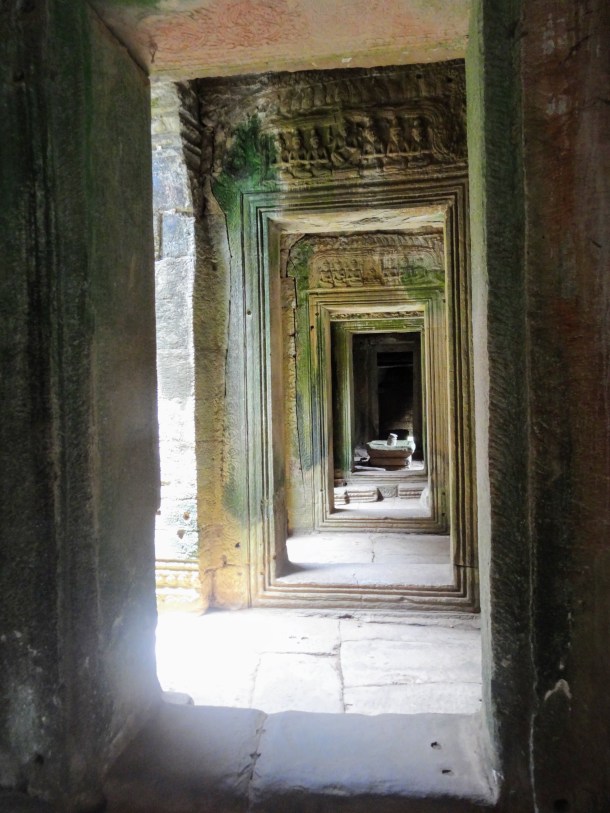
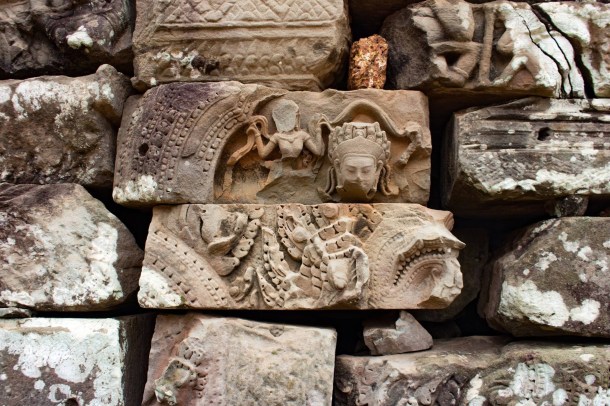
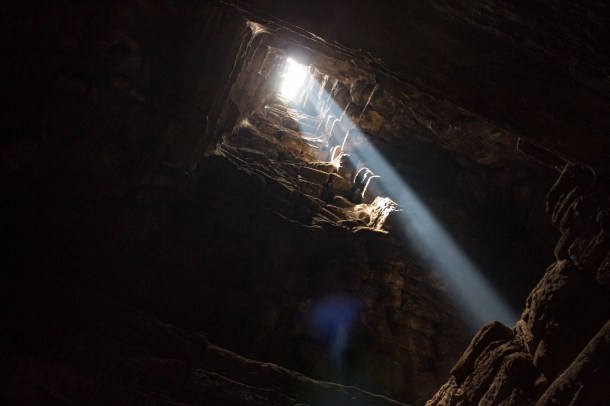
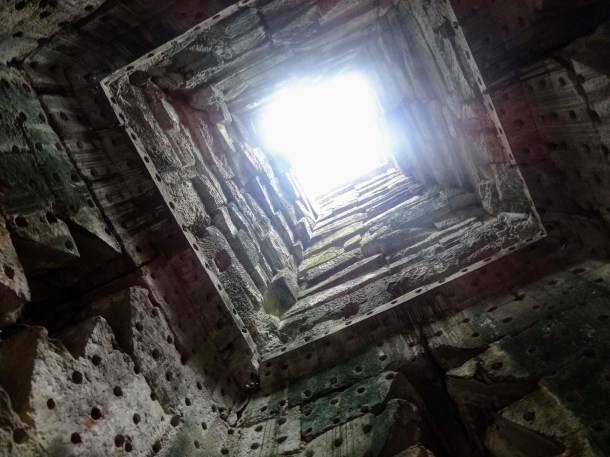
We walked the grounds of the Angkor Wat temple, climbing steep steps and observing low-relief friezes depicting scenes from Hindu epics. Natural skylights were built into the stone temples, where a beam of light, dust swirling through, would shine straight down into the shadowy chambers like a sign from god.



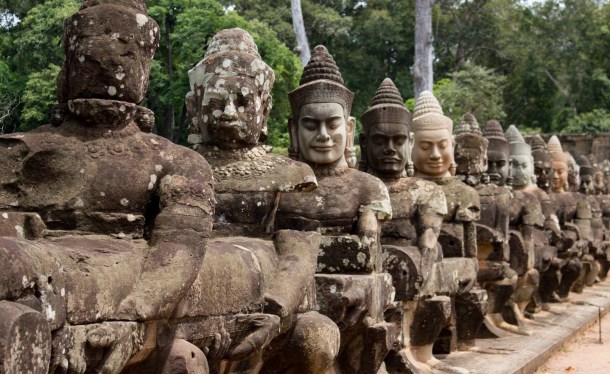
The Angkor Complex, as noted above, is giant. So Angkor Wat is one of many, many temples to visit. We got back in the car and drove toward the city of Angkor Thom. On the way, we saw people in red robes riding elephants down a road lined with a row of Buddhist guardian statues approaching the southern gate.


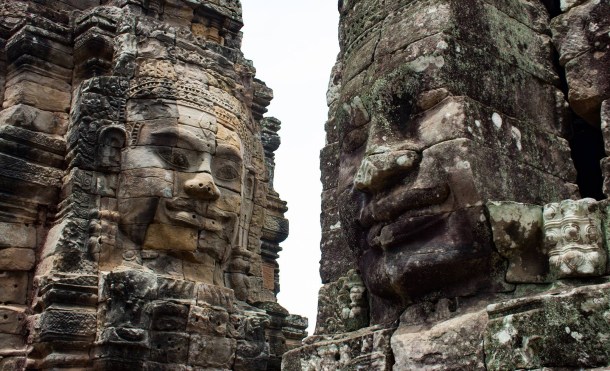
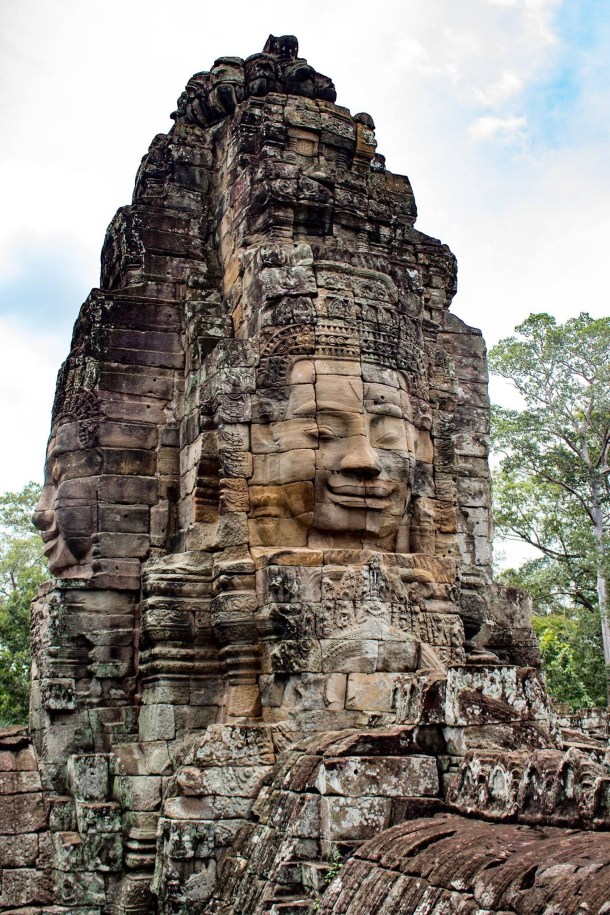
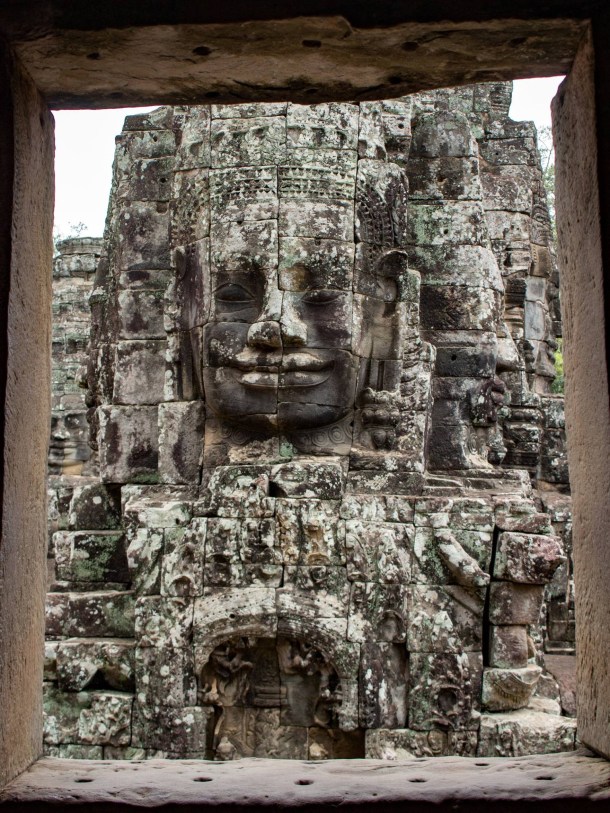
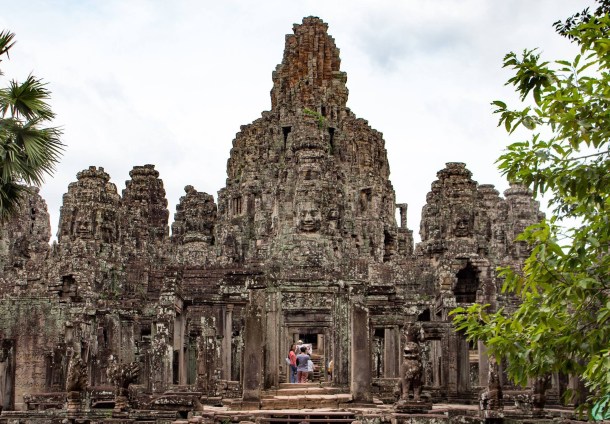
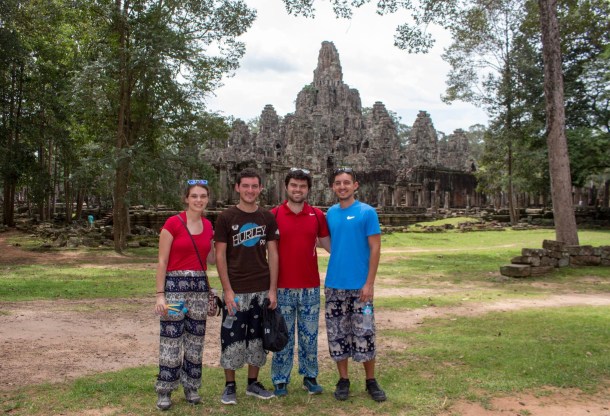
Our next stop would be Prasat Bayon, the iconic temple of magic faces. It holds around 50 towers, which are decorated on each of their four sides with a large, smiling face. In total, the Bayon towers, which are arranged in a cross formation, feature more than 200 smiling faces. Scholars believe the faces resemble King Jayavarman VII, who considered himself a god-king, and was the most powerful Khmer monarch of all time. The history of the name of this temple is a bit of a funny story. The Buddha is said to have reached enlightenment under a Banyan tree, making it a significant symbol in Buddhism. The temple supposedly used to be called Banyan Temple, but due to mispronunciation over the years, the name Bayon stuck as the accepted name. Everywhere you walked in the Bayon, it seemed like the thick-lipped smile of the bodhisattvas were smiling down upon you. The faces on the Bayon towers had Cambodian attributes like a broad forehead, downcast eyes, and wide nostrils. It felt like walking on the set of an Indiana Jones movie, or Legends of the Hidden Temple. It was hard to believe this wasn’t created by Lucasfilm or Nickelodeon, but by Cambodian laborers at the end of the 12th century. The faces added a human element to the ancient ruins, a reminder that people once frequented this temple to worship the bodhisattvas and the king. I’d have to say, this was my favorite temple of the ones we visited.

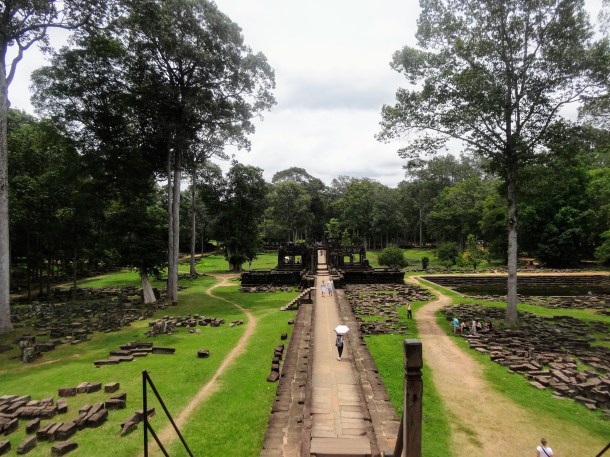
Next we went to the Baphuon, which was the state temple of King Udayadityavarman II. A long walkway supported by pillars led up to the domed structure. We climbed extremely steep stairs in the dead heat to look out over the temple, probably the way the king did long ago. It was a magnificent sight to see from the very top. Lush grass surrounded the walkway, jungle trees and vegetation were dotted with palm trees at the edge of the grass, and large, mossy rocks were scattered around the grounds. The stairs were so steep they were legitimately dangerous if you made a wrong step. We slowly descended one step at a time, partially constrained by our cheaply made elephant pants. Soon we were back to the car on the way to another masterpiece.


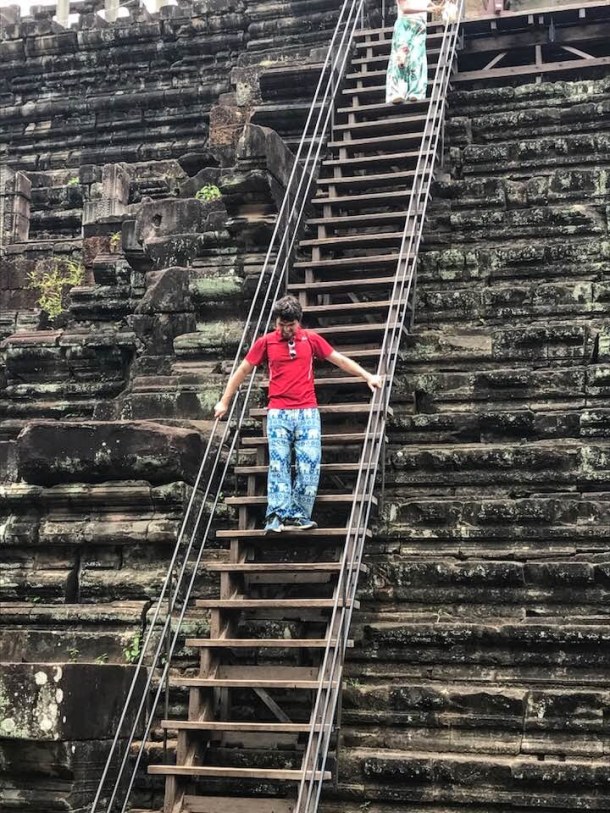
Dan braving the stairs
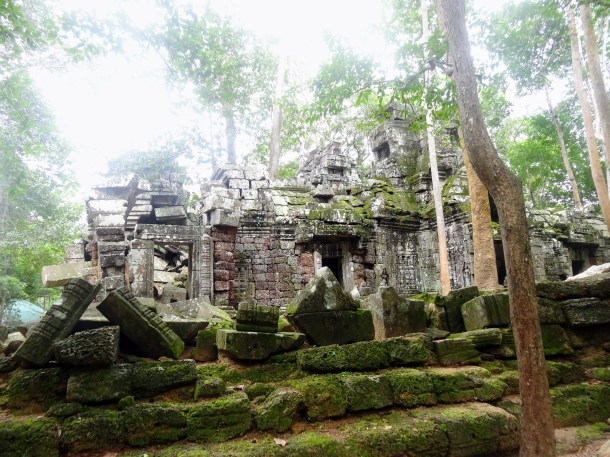
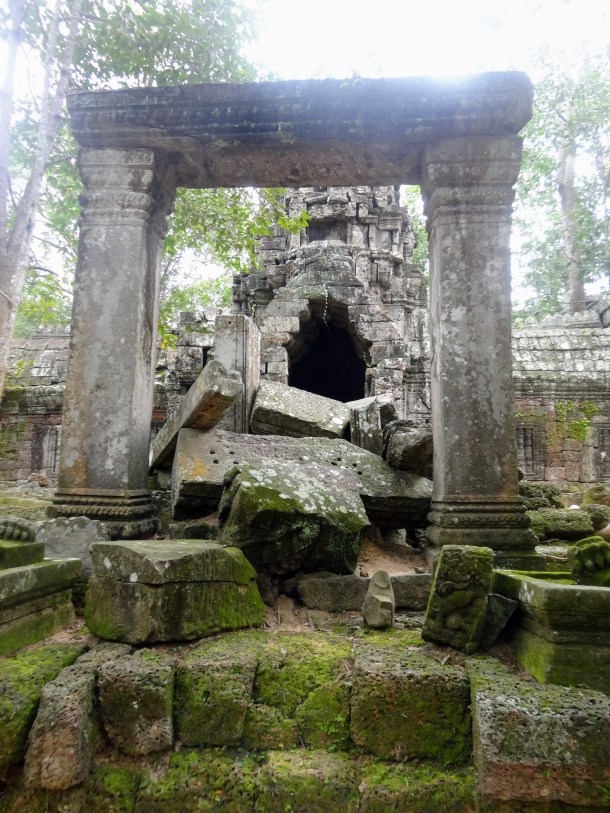
The next temple our guide showed us was in the woods, a bit removed from the center of the temple grounds. He said this temple was little visited, which was a nice change of pace from the popular, tourist ridden ones. We walked into the dilapidated, moss covered gates. We were by ourselves for the first time all day. It was peaceful. I’m not quite sure of the name of these particular ruins, mostly because it wasn’t a top destination easily researched online. However, it was also one of my favorites. It hadn’t been preserved as well as the other structures we had seen. Mossy slabs of rock were in disarray surrounding what was left of the small temple. But it felt untouched, almost as if we had just discovered it for the first time since it had been abandoned. We talked about what it would be like to be the first person to find something like this. I can’t speak for Dan, Zack, and Josh, but I know I was completely in awe of the architecture. At 25 years old, to see something completely unlike anything I had ever seen before, I felt like a little kid exploring nature for the first time— stunned in amazement at the things created before me, manmade or not. These temples felt a bit like works of nature the way they blended in with the surrounding jungle, trees with roots like long, spindly fingers intertwined with moss-covered stone.

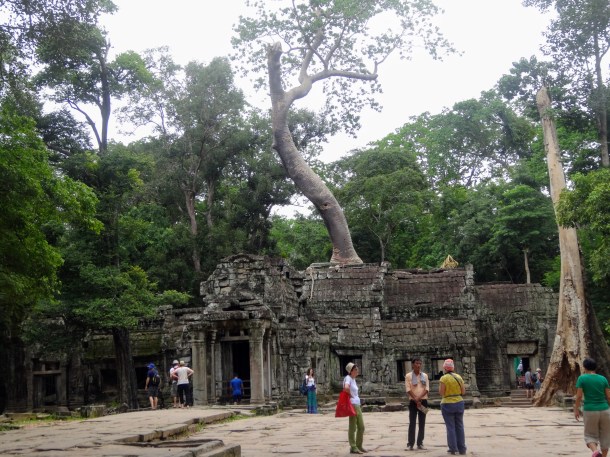
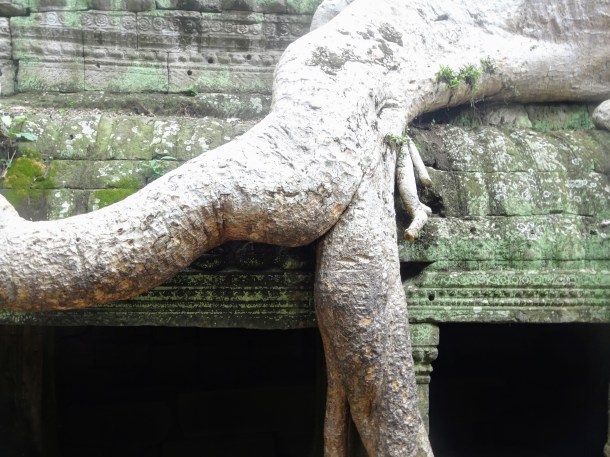
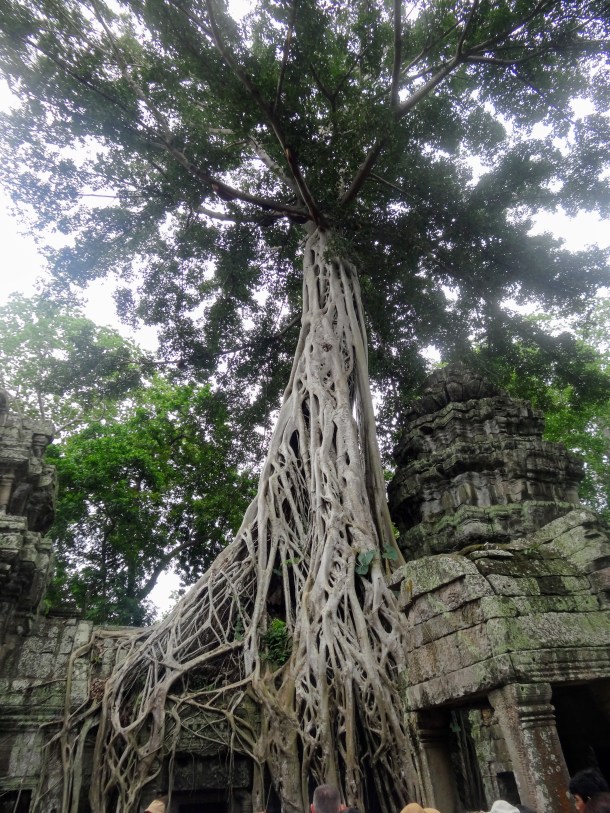
Our last stop in the complex was Ta Phohm, known as the “tree temple.” Large Tetrameles nudiflora trees had jutted out of the building and wrapped its roots along the walls of the temple. It’s one of the most visited temples in the complex because several scenes in the movie Tomb Raider were filmed here. Spider-web-looking roots netted gates throughout the temple. Thick, heavy roots appeared to spill over the roof of the building. Some roots were so heavy that they needed support structures to keep them from damaging the building. Many trees have been removed to preserve the temple, since the invasive roots can infiltrate almost anywhere.
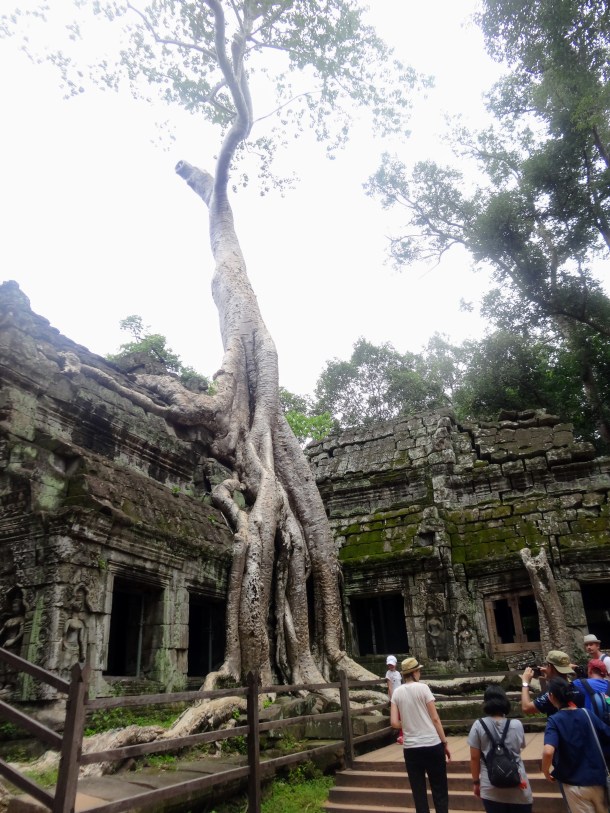
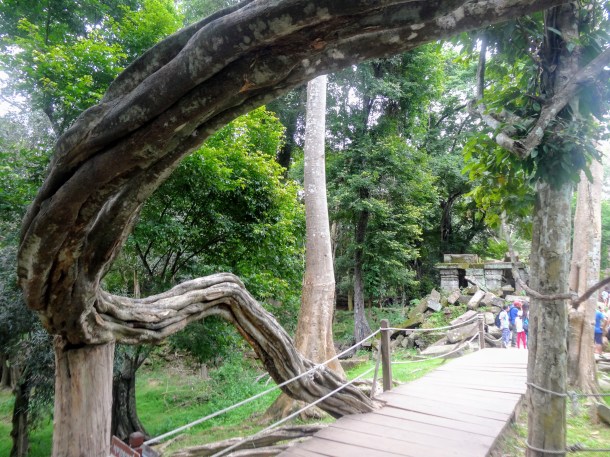
One famous root, our guide pointed out, looks just like a human butt.

At this point, while fascinated, we were pretty “templed out” from the overwhelming amount of information from the day and the unwavering heat. Our guide dropped us off at the airport and we were en route to Hanoi, Vietnam. But no airport stop is complete without Dan’s lounge access. The Siem Reap lounge was high class with fancy, glass light fixtures hanging from the ceiling, wine, and a custom noodle bar where you could choose your pasta and sauce. Next stop… Hanoi!
 Mandarin Allison