Despite our busy lantern themed day beforehand, we got up at 6:45 a.m. to make it to the train station before 8 a.m. My friend Julia had invited me on a day trip to a farm that produces soy sauce. She always finds the coolest excursions. Trips where you get to do something new and learn something in the process are right up my alley, so of course I accepted in the invitation. Brian and I met Kitty (Julia’s roommate) and Julia at Taipei Main Station, and soon we were on the express train to Qidu. Unfortunately our German friend Anja had overslept and wasn’t able to make it. After arriving at the fairly empty train station (in Kitty’s hometown), we took a cab to the farm. The man at the farm said we were early, and told us we could look around for a little while. We walked the grounds, which had cats and roosters roaming around outside. Empty rooms had TV screens for karaoke. Finally, the man came out and took us up the side of a hill behind the area we had just walked around. He told us we could pick a Chinese radish out of the ground, and that they’re best in the winter. He even gave us a free one! The others were 30 NT each, around $1 USD. We tugged the giant vegetables right out of the dirt, and they were as big as our heads, with huge leaves coming from the top. It almost looked like something out of a Neopets shop. From the radish area, we walked over to where bamboo was growing.

The farmer explained to Julia and Kitty in Chinese that every bamboo chute has six baby bamboo grow from the original. The farmers then take the babies and replant them in another area to give them space to grow. Apparently the bamboo growing at a slanted angle is better quality because it is stronger and healthier. People will invest 1,000 NT ($30) for whatever grows from one stalk in six months. The farm had a shelf full of trophies on the wall from all of their bamboo.
The soy sauce lady wasn’t quite ready for our lesson yet, so the farmer set us up with a few tokens in one of the KTV (karaoke) rooms. Brian and I did a passionate rendition of the Backstreet Boys’ “I Want It That Way,” Kitty sang a Taiwanese song, and then Brian and I were back with a reprise, Blink 182’s “All Star.” By the time we finished that, the soy sauce lady had brought out a pot of soy beans and a few empty bottles for us to fill with the final product: soy sauce.
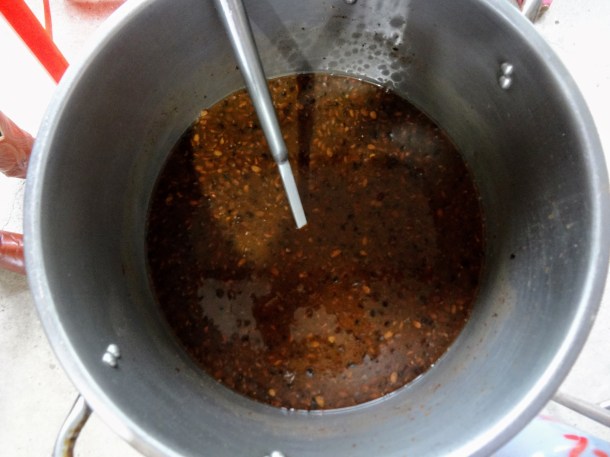
The first step to making soy sauce, according to the soy sauce lady, is to ferment the soy beans. Apparently, it’s much easier to buy the beans already fermented, as fermenting them yourself adds a lot of time to the process. Then, you soak the fermented beans in water for 12 hours, steam them for an hour and 40 minutes, and put a blanket over them to keep them at a specific temperature. Following that, you add a layer of salt to the top of the mixture, which helps to kill and prevent bacteria. Then, you let the mixture sit for four to six months, and remove the layer of salt from the top. At that point you drain the mixture through a mesh bag and heat it a total of three times, creating a less watery consistency each time. Finally, you add sugar, and your soy sauce is complete! (At least, that’s the process I understood from Kitty and Julia’s translation.)
We got to watch and take part in the draining and heating step of some soy sauce that was already mid-way through the full process. Of course, it takes months to make the proper version. Ours was delicious, despite shortcutting a few of the steps. They gave us a sample of their properly timed soy sauce and, wow, was it packed with flavor… much zestier than a bottle of Kikkoman from the grocery store.


Following our soy sauce lesson, we had a buffet style lunch featuring various fresh veggies from the farm. I noticed the Chinese radish we had picked earlier was featured in the soup. After lunch, we took a taxi to the coast and checked out the scenic cliffs in the Keelung area. Turns out, it’s the same place I went with Howard in October! I did some more research on what that piece of land in the ocean is called, and it’s named Keelung Islet, part of the Chilung Volcano Group, a grouping of extinct volcanoes off the coast of northern Taiwan.

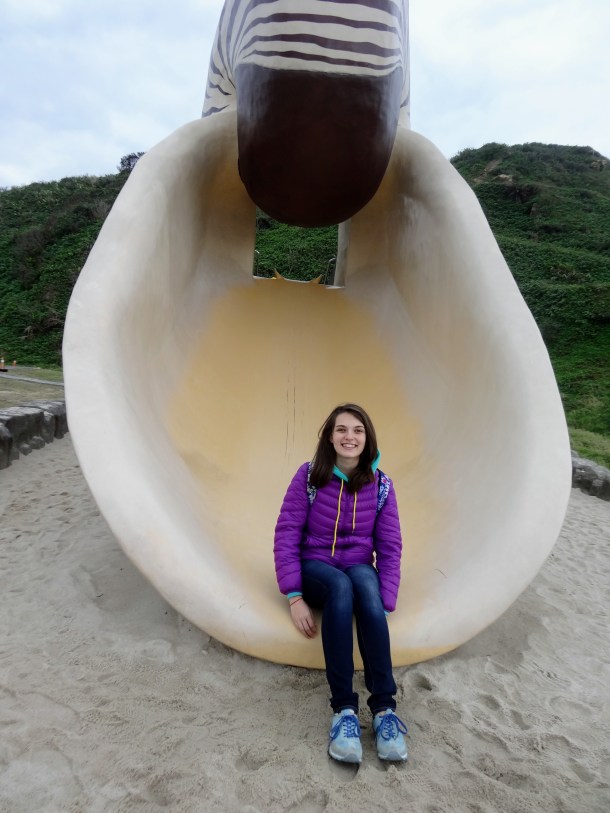
Nearby the hike that Howard and I took along the coast was another area that I hadn’t seen before. Vendors were selling colorful kites that flapped and danced in the costal wind, and a seashell slide brought smiles to people’s faces. I climbed the stairs and rode the seashell slide; it was a good time.
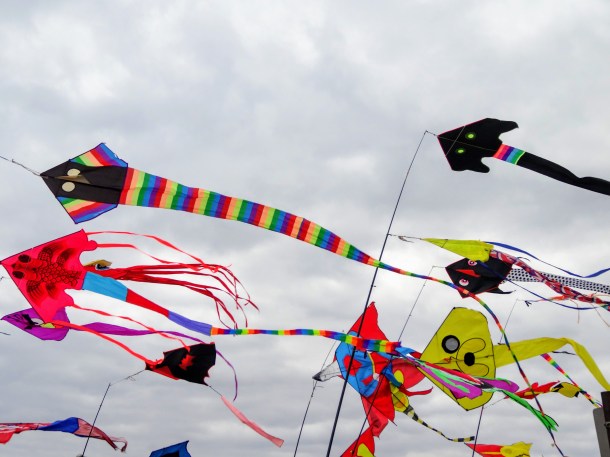
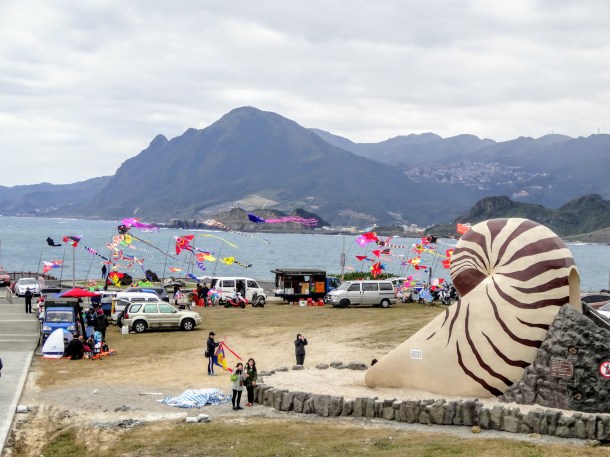
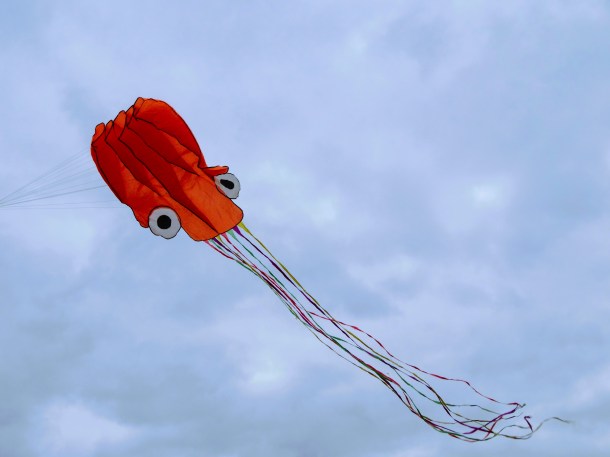
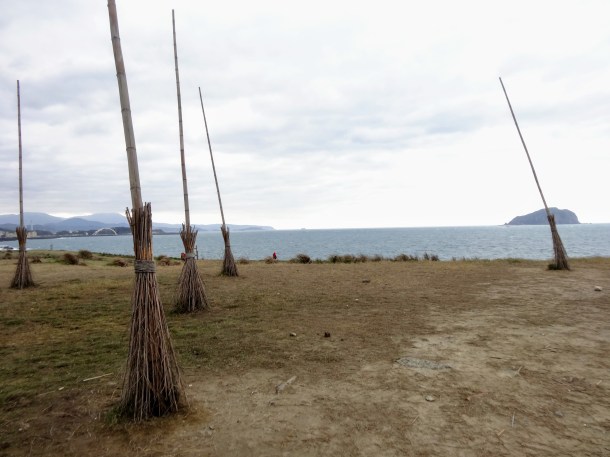
There was also a modern art installation right on the coast featuring giant broomsticks, and of course, we didn’t miss the photo opportunity.

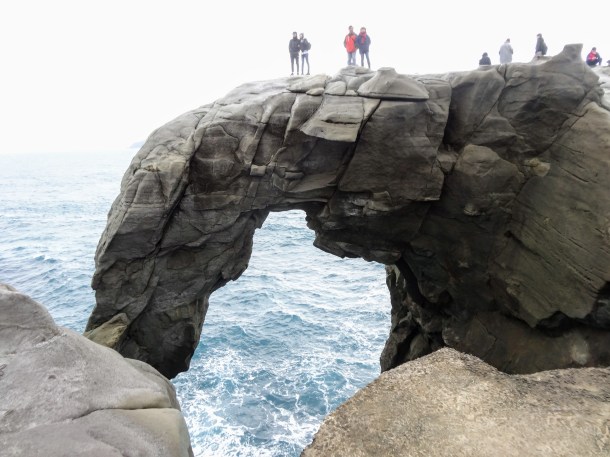
We wanted to explore the area more since we had come all this way and it was still early in the afternoon. So we took another taxi to Elephant Rock, a rock that’s shaped like an elephant. On the cab ride, Kitty gave us a tour of her hometown, pointing out schools she attended and an ex-boyfriend’s house on the drive over. It was a bit of a walk from where we were dropped off to the actual rock. We kept having to ask people if we were going the right direction because we didn’t see it ahead of us. They assured us it was further ahead. We reached a rocky beach, walked across many of the rocks, climbed up a steep hill, and there it was: Elephant Rock. It truly did look like an elephant. I wasn’t expecting it to be so realistic. Its trunk descended into the ocean and notches in the side of the rock replicated large ears. Some brave people took jumping-in-mid-air photos on/near the rock… I would never!
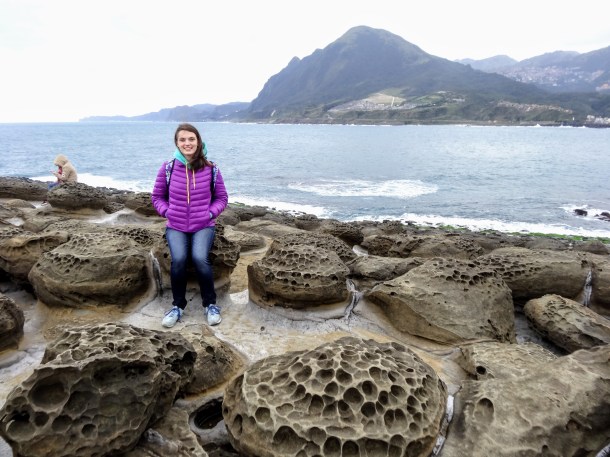
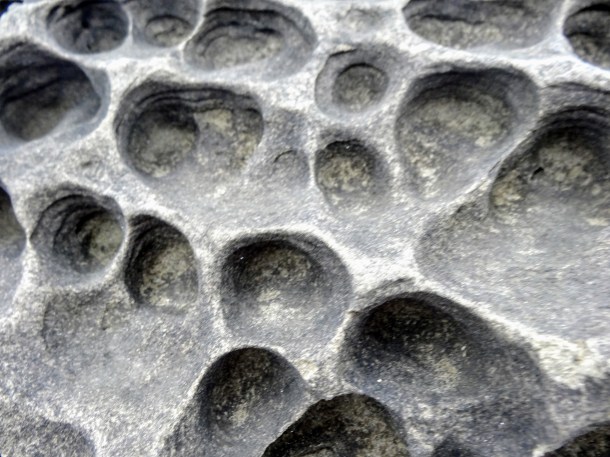
Instead, I took the safer photo route of sitting on some weird looking, pock marked, mushroom shaped rocks. I researched how these rocks got to looking this way, and I found out that debris from the ocean like shells and urchin cover the rocks, the sea water decomposes the debris and rock, and the salt from the sea continues this decomposition over time, creating larger holes that form a honeycomb-like pattern. It’s called “Honeycomb Weathering,” and you can read about it and other really cool rock formations in the area on the Yehliu Geopark website.
Once we got our fill of cool rocks, we headed to the famous Keelung night market near the Keelung Harbor. I had visited here with Howard as well, but it was nighttime and rainy the day we went. I had my very first gua bao here (steamed bun filled with pork belly meat, stir-fried pickled mustard greens, cilantro, and ground peanuts) and I can’t believe I hadn’t experienced it before now. How come no one told me about this?! It’s amazing, and I’ll be having many more at night markets to come, I’m sure. I also got an old-fashioned style burrito filled with pork, veggies, and ground peanuts that Kitty said her Grandmother used to make when she was younger. Another great recommendation. I’ve found it’s really helpful to have Taiwanese people with you at night markets! Julia and Kitty also suggested a sugarcane drink that was top notch. Thank you for being our translators and night market mentors… I don’t know what Brian and I would have eaten without you 🙂
Finally, we were exhausted, so we took the train home. Brian and I mustered up enough energy to go to David’s birthday party (one of the hosts from board games), where we ordered in Mexican food, ate cake, and watched videos of a guy purposely getting stung by the world’s most dangerous bugs. The others had gone paint balling earlier in the day, so it was nice to meet up with them in the evening (no welts for me). Another great day in the books!
 Mandarin Allison